
Assembling a wooden bunk bed is a rewarding project, creating a safe and comfortable space. This guide provides simple steps for a sturdy, stylish result, perfect for families!
Safety First: Important Considerations
Prioritize safety throughout the wooden bunk bed assembly process. Always use guardrails on both sides of the upper bunk, especially if near a wall – position the guardrail against it.
Ensure adequate space around the bunk bed, free from obstructions like fans or cords. Regularly inspect all bolts and connections for tightness.
Weight capacity is crucial; adhere to the manufacturer’s guidelines. Supervise children during and after assembly, educating them about safe bunk bed use. Consider wall anchoring for added stability, particularly for active sleepers. A stable and secure bunk bed is paramount for peace of mind.
Tools Required for Assembly
Assembling your wooden bunk bed requires a few essential tools for a smooth process. You’ll need a screwdriver (Phillips head is common), a wrench set to tighten bolts, and potentially a rubber mallet for gently fitting pieces together.
A power drill with appropriate bits can speed up screw insertion, but use caution! A level ensures the bed is stable, and a measuring tape helps with slat spacing.
Don’t forget work gloves for hand protection and safety glasses. Having these tools readily available will make the assembly efficient and prevent frustration.

Unboxing and Inventory
Carefully unpack all components and compare them against the parts list. Identifying each piece before assembly prevents delays and ensures a successful build!
Checking the Parts List
Begin by meticulously reviewing the provided parts list. This document is crucial for verifying that all necessary components are present before you start the assembly process. Carefully cross-reference each item on the list with the physical parts you’ve unpacked.
Pay close attention to quantities and part numbers, as even a seemingly minor discrepancy can cause significant issues later on; Note the different types of wood pieces – headboard, footboard, side rails, and support beams – and their corresponding labels.
Hardware, like bolts, screws, and slats, should also be accounted for. If anything is missing, immediately contact the manufacturer or retailer for replacements to avoid frustrating interruptions.
Identifying Hardware Components
Accurately identifying the hardware is vital for a successful assembly. Bunk bed kits typically include various bolts – carriage bolts are common for structural connections – alongside screws of differing lengths and head types.
Familiarize yourself with washers, nuts, and any specialized connectors. Often, instructions will refer to hardware by a letter or number; match these designations to the physical pieces.
Pay attention to the size and thread type of each component. Using the wrong screw can damage the wood or compromise the bed’s stability. Separate and organize the hardware into labeled containers for easy access during assembly.

Assembling the Bunk Bed Frame
Begin by constructing the foundational frame, carefully attaching side rails to the headboard and footboard, ensuring a secure and level base for safety.
Attaching the Side Rails
Securely fastening the side rails is crucial for the bunk bed’s overall stability. Typically, this involves aligning the rails with pre-drilled holes on the headboard and footboard. Use the provided bolts and screws, tightening them initially by hand to avoid stripping the wood.
Ensure the rails are flush with the frame components before fully tightening with a wrench. Double-check alignment; a slightly off-kilter rail can compromise the entire structure. Consider using wood glue in addition to the hardware for enhanced durability, though this isn’t always necessary. Properly attached side rails form the core of a safe and robust bunk bed.
Connecting the Headboard and Footboard
Joining the headboard and footboard establishes the foundational frame of the bunk bed. This usually involves metal brackets or direct bolt connections, depending on the bed’s design. Align the components carefully, ensuring they are square and level before tightening any hardware.
Utilize the provided bolts, washers, and nuts, tightening them gradually in a criss-cross pattern to distribute pressure evenly. Avoid over-tightening initially, allowing for minor adjustments. A solid connection between these two pieces is paramount for the bed’s structural integrity and safety, supporting the weight and movement of sleepers.
Installing Support Beams
Support beams are crucial for the bunk bed’s stability and weight distribution, particularly the upper bunk. These beams typically run lengthwise along the bed frame, connecting the headboard and footboard. Securely attach them using bolts and brackets, ensuring they are flush with the frame’s inner edges.
Proper alignment is essential; use a level to confirm the beams are horizontal. Tighten all fasteners firmly, but avoid over-tightening which could damage the wood. These beams provide the necessary reinforcement to prevent sagging and ensure a safe sleeping environment for the upper bunk occupant.

Upper Bunk Construction
Constructing the upper bunk requires precision and attention to safety. Secure rails and slats, then install guardrails, prioritizing a stable and protected sleeping area.
Securing the Upper Bunk Rails
Attaching the upper bunk rails is a critical step for safety and stability. Begin by carefully aligning the rails with the headboard and footboard, ensuring a flush connection. Utilize the provided bolts and washers, tightening them initially by hand to avoid cross-threading.
Once aligned, use the appropriate wrench to gradually tighten the bolts, working in a diagonal pattern to distribute pressure evenly. Do not overtighten, as this could damage the wood. Double-check that all connections are secure and that the rails are firmly attached to the frame. A wobbly connection at this stage can compromise the entire structure’s integrity.
Installing Upper Bunk Slats
Installing the upper bunk slats provides essential mattress support and distributes weight evenly. Begin by evenly spacing the slats between the side rails, ensuring consistent gaps for proper ventilation and preventing mattress sagging.
Secure each slat to the rails using the provided screws – typically 2-1/2 inch screws are recommended. Pre-drilling pilot holes can prevent wood splitting, especially with hardwood frames. Ensure screws are flush with the slat surface to avoid discomfort. Regularly inspect these connections, as they bear significant weight and require periodic tightening for continued safety.
Guardrail Installation – Safety Measures
Guardrail installation is paramount for upper bunk safety, preventing accidental falls during sleep. Always utilize guardrails on both long sides of the upper bunk. If positioning the bunk bed against a wall, place the full-length guardrail against that wall, creating a secure barrier.
Ensure guardrails are firmly attached using appropriate bolts and screws, checking for stability after installation. Regularly inspect these connections for looseness. Adhering to height requirements is crucial; guardrails should extend sufficiently above the mattress surface to effectively contain sleepers.

Lower Bunk Construction
Attaching lower bunk rails and installing lower bunk slats completes the bed’s structure. Ensure secure connections for a stable and safe sleeping platform.
Attaching Lower Bunk Rails
Begin by carefully aligning the lower bunk rails with the headboard and footboard. Utilize the provided hardware – typically bolts and screws – to secure these components. Ensure a flush connection, as this is crucial for the bunk’s overall stability.
Tighten the bolts gradually, alternating between sides to distribute pressure evenly. Avoid over-tightening initially; a final tightening will occur later in the process. Double-check that the rails are firmly attached and level before proceeding. Proper alignment prevents wobbling and ensures a safe sleeping environment.
Refer to the manufacturer’s instructions for specific guidance on rail attachment, as designs can vary.
Installing Lower Bunk Slats
With the lower bunk rails secured, it’s time to install the slats. These provide essential support for the mattress. Insert the bed slats between the front and back rails, ensuring they are evenly spaced apart for uniform weight distribution.
Fasten the slats to the rails using the provided screws – typically 2-1/2 inch screws are recommended. Secure each slat individually, ensuring a snug fit. This step is vital for preventing mattress sagging and ensuring a comfortable sleep surface.
Double-check that all slats are firmly attached and properly aligned before moving on.
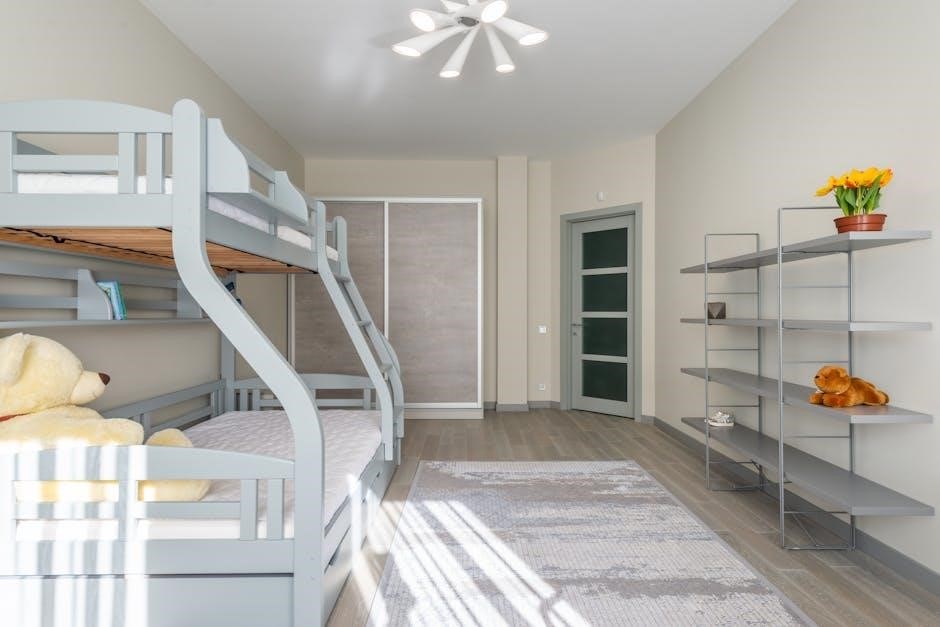
Final Assembly and Checks
Complete the assembly by tightening every bolt and screw. Perform a stability test, and verify the bunk bed meets the specified weight capacity guidelines.
Tightening All Bolts and Screws
Ensuring a secure bunk bed requires meticulous attention to all fasteners. Systematically go through each bolt and screw, using the appropriate tool – typically a wrench or Allen key. Tighten them firmly, but avoid over-tightening, which could strip the threads or damage the wood.
Pay close attention to connections between the side rails, headboard, footboard, and support beams. Double-check all hardware after the initial tightening, as components may shift during the assembly process. A properly tightened bunk bed is a safe bunk bed, so don’t rush this crucial step!
Stability Test and Weight Capacity
Before allowing anyone to sleep in the bunk bed, perform a thorough stability test. Gently but firmly rock the entire structure from side to side and end to end. Any wobbling indicates loose connections that need addressing.
Crucially, understand the bunk bed’s weight capacity, usually specified by the manufacturer. Exceeding this limit compromises safety. Consider the combined weight of the mattress and occupants. Regularly re-evaluate stability as children grow, and always adhere to the stated weight restrictions for long-term safety.

Guardrail Specifics & Wall Placement
Always utilize guardrails on both sides of the upper bunk for safety. If positioned against a wall, place the full-length guardrail there to prevent falls.
Guardrail Height Requirements
Ensuring proper guardrail height is paramount for bunk bed safety. Regulations typically dictate a minimum height of 5 inches (approximately 12.7 centimeters) extending at least 3 inches (7.6 cm) above the top of the mattress.
This prevents accidental roll-offs during sleep. Guardrails should be securely attached to the bed frame, with no gaps large enough for a child to slip through. Regularly inspect these connections to maintain stability.
Consider the age and activity level of the child using the bunk. Higher guardrails might be beneficial for younger or more restless sleepers, providing an extra layer of protection and peace of mind for parents.
Positioning Against the Wall
When placing a bunk bed against a wall, prioritize safety and stability. The guardrail positioned against the wall eliminates a potential fall hazard on that side. However, avoid placing the bed directly against the wall without a small gap – approximately 2-3 inches – to allow for air circulation and prevent moisture buildup.
Consider wall construction; ensure the wall is sturdy enough to support the bed’s weight and any potential impact. Securing the bunk bed to the wall with appropriate brackets is highly recommended, especially for active children, adding an extra layer of security.

Bed Slat Installation Details
Evenly space the bed slats between the front and back rails for optimal mattress support. Secure them firmly using screws for stability!
Even Spacing of Slats
Achieving consistent spacing between the wooden slats is crucial for uniform mattress support and preventing premature wear. Begin by measuring the total distance between the inner edges of the side rails. Divide this measurement by the total number of slats to determine the ideal gap size.
Use a measuring tape or a spacer block cut to the calculated size to ensure each slat is positioned correctly. Consistent gaps distribute weight evenly, enhancing the bunk bed’s structural integrity and providing a comfortable sleep surface. Avoid overcrowding or large gaps, as both can compromise support.
Securing Slats to Rails
Properly fastening the wooden slats to the bunk bed rails is essential for safety and stability. Typically, this involves using screws – often 2-1/2 inch screws are recommended – driven through the slats and into the side rails. Ensure the screws are countersunk to prevent snagging or discomfort.
Pre-drilling pilot holes can prevent the wood from splitting, especially with hardwood slats. Distribute the screws evenly along the length of each slat, securing them at multiple points for maximum support. Double-check that all screws are firmly tightened, but avoid over-tightening, which could strip the wood.

Troubleshooting Common Issues
Common problems include missing parts or a wobbly frame. Carefully re-check the parts list and ensure all bolts are tightened correctly for stability.
Missing Parts
Discovering missing components during assembly can be frustrating, but don’t panic! First, meticulously re-examine all packaging materials – sometimes smaller items are hidden within. Consult the parts list included with your bunk bed; carefully compare what you have to what you should have.
If a part is genuinely missing, contact the manufacturer or retailer immediately. Most companies are happy to ship replacement parts, often free of charge. Have your order number and the specific part name/number ready to expedite the process. Avoid attempting to substitute parts, as this could compromise the bed’s structural integrity and safety.
Wobbly Frame
A wobbly bunk bed frame is a serious safety concern and requires immediate attention. Begin by systematically tightening all bolts and screws – this is the most common cause. Ensure each fastener is snug, but avoid over-tightening, which can strip the threads.
If tightening doesn’t resolve the issue, check that the bed is on a level surface. Use shims under the legs to correct any imbalances. Inspect the support beams and ensure they are correctly positioned and securely fastened. If the wobble persists, retrace your assembly steps to identify potential errors.

Maintenance and Care
Regularly tighten all bolts to maintain stability and safety. Clean the wood with appropriate products and protect it from damage for longevity!
Regular Bolt Tightening
Consistent bolt tightening is crucial for bunk bed safety and structural integrity. Wood naturally expands and contracts with temperature and humidity changes, potentially loosening connections over time. Inspect all bolts monthly, or more frequently with active use. Use the appropriate wrench or Allen key – do not overtighten, as this can strip threads or damage the wood.
Pay special attention to bolts connecting the side rails, headboard, footboard, and support beams. A loose bolt can lead to wobbling, creaking, or even structural failure. Make it a habit to include bolt tightening as part of your routine home maintenance checks, ensuring a secure and reliable sleeping environment for years to come.
Wood Cleaning and Protection
Maintaining the wood finish extends the life and beauty of your bunk bed. Regularly dust with a soft, dry cloth to prevent buildup. For deeper cleaning, use a wood-specific cleaner and a slightly damp cloth – avoid harsh chemicals or abrasive cleaners. Always test the cleaner in an inconspicuous area first.
Consider applying a wood protectant or polish periodically to guard against scratches and moisture damage. This will help preserve the wood’s natural luster and prevent warping. Avoid placing the bunk bed in direct sunlight or near sources of heat, as this can cause fading and drying.