Kenmore Ultra Wash Dishwasher Owners Manual: A Comprehensive Guide
This manual provides essential guidance for Kenmore ULTRA WASH dishwasher models‚ including installation‚ operation‚ maintenance‚ and troubleshooting steps for optimal performance.
Welcome to the world of efficient dishwashing with your Kenmore Ultra Wash dishwasher! This appliance is designed to deliver sparkling clean dishes with minimal effort‚ utilizing advanced wash cycles and convenient features. This manual serves as a comprehensive resource‚ guiding you through every aspect of your dishwasher’s operation.

From initial setup and understanding the control panel to detailed wash cycle descriptions and maintenance procedures‚ we’ve covered it all. Properly utilizing this guide will ensure years of reliable performance and optimal cleaning results. Familiarize yourself with the safety precautions outlined within to guarantee safe and effective use.
Model Numbers Covered
This owner’s manual applies to a range of Kenmore ULTRA WASH dishwasher models‚ ensuring compatibility across various series. Specifically‚ this guide covers models 665.15832‚ 665.15834‚ 665.15837‚ and 665.15839. It also extends to models 665.16832‚ 665.16834‚ and related variations within the ULTRA WASH line.
Additionally‚ information is applicable to models 15821‚ 15825‚ 15828‚ and 15831. Always verify your specific model number‚ typically found on the appliance’s rating plate‚ to confirm the manual’s relevance. Utilizing this manual with an incorrect model may result in improper operation.
Safety Precautions
To prevent injury or damage‚ adhere to these safety guidelines. Always disconnect the power supply before maintenance. Do not use extension cords. Ensure proper grounding to avoid electrical shock. Keep children away during operation and when detergents are present.
Avoid touching heating elements immediately after use‚ as they remain hot. Only use dishwasher-safe detergents and rinse aids. Never operate the dishwasher with a damaged power cord or if it malfunctions. Contact qualified service personnel for repairs. Improper installation voids the warranty.
Dishwasher Parts Identification
Familiarize yourself with key dishwasher components. Exterior components include the control panel‚ door latch‚ spray arms‚ and detergent dispenser. Interior components consist of the upper and lower racks‚ filter assembly‚ and spray arms. Locate the water inlet valve and drain hose connections.
Understanding these parts aids in maintenance and troubleshooting. Refer to diagrams within this manual for precise locations. Proper identification ensures safe and effective operation of your Kenmore ULTRA WASH dishwasher.
Exterior Components
The exterior features several key parts; The control panel allows cycle selection and option settings. A robust door latch secures the dishwasher during operation. Spray arms are visible upon opening‚ and the detergent dispenser is located on the door.
Inspect these components regularly for damage. Ensure the door latch functions correctly for a watertight seal. Familiarity with these exterior parts facilitates easy operation and maintenance of your Kenmore ULTRA WASH dishwasher.
Interior Components
Inside‚ you’ll find essential washing elements. The upper and lower racks hold dishes securely. Spray arms distribute water for cleaning. A filter system captures food particles‚ preventing clogs. The wash impeller circulates water with force.
Regularly inspect and clean the filter to maintain peak performance. Ensure spray arms rotate freely. Proper arrangement of dishes on the racks optimizes cleaning. These interior components work together for spotless results.
Getting Started: Installation & Initial Setup
Proper installation is crucial for optimal dishwasher function. Begin by carefully connecting the water supply‚ ensuring a secure fit to prevent leaks. Next‚ establish the drainage setup‚ connecting the drain hose to the appropriate plumbing.
Verify all connections are tight before powering on; Run an initial test cycle without detergent to flush the system. This removes any manufacturing residue. Refer to the detailed instructions for specific model requirements.
Water Supply Connection
Connect the dishwasher’s water inlet hose to a hot water supply line‚ typically ½ inch in diameter. Use a new hose and avoid reusing old ones. Ensure the water pressure falls between 20 and 120 psi.
A shut-off valve is essential for easy maintenance and emergency situations. Tighten all connections securely to prevent leaks. Double-check for proper sealing before proceeding. Improper connection can lead to water damage.
Drainage Setup
Proper drainage is crucial for effective dishwasher operation. Connect the drain hose to a household drain‚ typically under the sink‚ ensuring it’s securely clamped. Avoid connecting it directly to a garbage disposal unless a knockout plug has been removed.
The drain hose should loop high under the sink to prevent wastewater from flowing back into the dishwasher. Ensure there are no kinks or obstructions in the hose.
Understanding the Control Panel
The Kenmore Ultra Wash dishwasher’s control panel allows for customized cleaning cycles. It features cycle selection buttons for Normal‚ Heavy Duty‚ Delicate‚ and Quick Wash. Option settings include heated dry‚ sanitize‚ and delay start.
Illuminated indicators display the selected cycle and options. Pressing ‘Start’ initiates the chosen wash program. Temperatures and water usage are indicated for each cycle‚ with an asterisk denoting potentially longer run times based on incoming water temperature.
Cycle Selection Guide
The Normal Wash cycle is ideal for everyday dish loads with moderate soil levels. Heavy Duty tackles baked-on food and tough messes‚ utilizing higher temperatures and extended wash times. Delicate/China Wash provides gentle cleaning for fragile items.
For lightly soiled dishes‚ the Quick Wash cycle offers a faster cleaning solution. Cycle times vary‚ including dry time‚ and may be longer depending on water temperature. Refer to the control panel for specific cycle details and estimated durations.
Option Settings Explained
The Kenmore Ultra Wash dishwasher offers several option settings to customize your wash cycle. These include heated dry for enhanced drying performance‚ and sanitize to eliminate bacteria. Delay Start allows you to schedule washes for convenience.
Additional options may include a high-temp wash for stubborn soils and a rinse-only cycle. Understanding these settings ensures optimal cleaning and energy efficiency. Consult the control panel display for detailed explanations of each option and its impact on the wash cycle.
Wash Cycles: Detailed Descriptions
The Kenmore Ultra Wash dishwasher features a variety of wash cycles tailored to different cleaning needs. The Normal Wash cycle is ideal for everyday loads‚ while the Heavy Duty cycle tackles baked-on food.
For delicate items‚ the Delicate/China cycle provides gentle cleaning. A Quick Wash cycle offers a faster option for lightly soiled dishes. Cycle times and water usage vary; refer to the control panel for specifics. Temperatures indicate added heat‚ and asterisked times may be longer based on incoming water temperature.
Normal Wash Cycle
The Normal Wash cycle is designed for regularly soiled dishes‚ offering a balance of cleaning power and efficiency. This cycle utilizes moderate water temperature and spray pressure to remove food residue from everyday loads.
It’s suitable for a wide range of dishware‚ including plates‚ glasses‚ and cookware. Expect a typical cycle time‚ including drying‚ as indicated on the control panel. Water usage falls within standard ranges for dishwashers‚ ensuring responsible consumption.
Heavy Duty Wash Cycle
The Heavy Duty Wash cycle is engineered for tackling heavily soiled pots‚ pans‚ and casserole dishes. This cycle employs higher water temperatures and increased spray pressure to effectively remove baked-on food and stubborn residue.
It’s ideal for items that require intense cleaning‚ but may consume more water and energy. Cycle times are extended to accommodate the thorough wash process. Ensure items are dishwasher-safe before selecting this powerful cleaning option.
Delicate/China Wash Cycle
The Delicate/China Wash cycle is specifically designed for fragile items like glassware‚ china‚ and delicate dishware. This cycle utilizes lower water temperatures and a gentler spray action to prevent chipping or breakage.

It’s crucial for preserving the beauty and integrity of your most cherished dishes. Avoid overloading the dishwasher during this cycle to ensure proper cleaning and minimize the risk of damage. This cycle prioritizes care over intense cleaning power.
Quick Wash Cycle
The Quick Wash cycle is ideal when you need clean dishes in a hurry‚ offering a significantly shorter wash time. This cycle is best suited for lightly soiled dishes that don’t require intensive cleaning.
While efficient‚ it may not remove stubborn food residue. It uses less water and energy‚ making it an environmentally conscious choice for smaller loads. Remember that the cycle time may vary based on incoming water temperature.
Loading the Dishwasher Correctly

Proper loading maximizes cleaning efficiency and ensures all dishes receive adequate water coverage. Avoid overcrowding‚ as this can hinder water circulation and result in poorly cleaned items. Place larger items along the sides and back of the racks.
Ensure spray arms can rotate freely without obstruction. Face soiled surfaces towards the center. Secure lightweight items to prevent them from shifting during the wash cycle‚ optimizing space and cleaning performance.
Upper Rack Loading Tips
The upper rack is ideal for delicate items like glasses‚ cups‚ and small bowls. Secure these items to prevent movement during the wash cycle. Place glasses and cups upside down to ensure thorough cleaning and prevent water pooling. Avoid placing tall items that may obstruct the lower spray arm’s rotation.
Ensure items don’t nest together‚ allowing water to reach all surfaces. Utilize adjustable tines to accommodate various dish sizes‚ maximizing space and cleaning effectiveness.
Lower Rack Loading Tips
The lower rack is designed for larger‚ heavier items like pots‚ pans‚ and plates. Face soiled surfaces towards the center for optimal cleaning. Securely load these items to prevent them from shifting during operation‚ potentially blocking the spray arm. Avoid overcrowding‚ ensuring water reaches all surfaces.
Larger items should not obstruct the detergent dispenser or the lower spray arm’s rotation. Utilize the adjustable tines to create secure spaces for various dish sizes‚ maximizing capacity and cleaning performance.
Detergent & Rinse Aid Usage
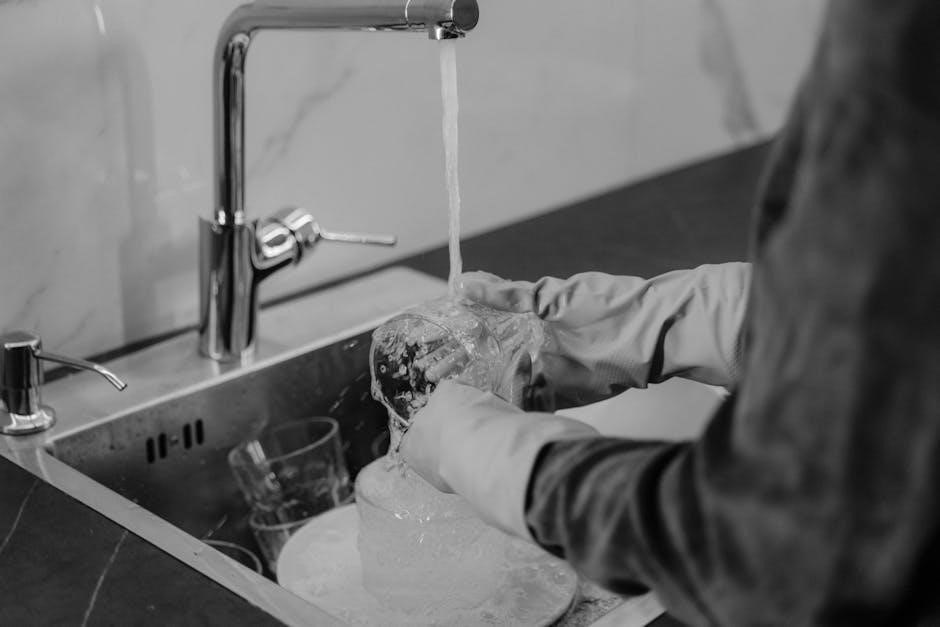
Use only detergents specifically formulated for automatic dishwashers to avoid excessive suds or damage. Recommended detergents include powder‚ gel‚ or tablet forms; follow package instructions for proper dosage based on water hardness and soil level. Ensure the detergent dispenser is securely closed before starting a cycle.
Rinse aid helps dishes dry spot-free by reducing water surface tension. Fill the rinse aid compartment‚ adjusting the setting for optimal results based on water hardness. Regularly check and refill the rinse aid for consistently sparkling dishes.
Recommended Detergents

For optimal cleaning performance with your Kenmore Ultra Wash dishwasher‚ utilize detergents specifically designed for automatic dishwashers. Powder‚ gel‚ and tablet formulations are all suitable‚ but always adhere to the manufacturer’s dosage guidelines on the packaging. Consider water hardness – harder water requires more detergent.
Avoid hand dish soap‚ as it creates excessive suds. High-quality detergents containing enzymes effectively break down food particles. Experiment with different brands to find one that consistently delivers satisfactory results for your typical dishwashing loads.
Rinse Aid Compartment & Benefits
The rinse aid compartment‚ typically located near the detergent dispenser‚ releases rinse aid during the final rinse cycle. Using rinse aid significantly improves drying performance‚ especially with plastic items‚ and reduces water spots and filming.
Regularly check the rinse aid level and refill as needed. Adjust the rinse aid dispenser setting based on water hardness – higher settings for harder water. Rinse aid promotes sheeting action‚ allowing water to drain more efficiently‚ resulting in sparkling clean dishes.
Cleaning & Maintenance
Regular cleaning maintains your Kenmore Ultra Wash dishwasher’s efficiency and longevity. Periodically clean the interior with a damp cloth and mild detergent. Focus on the door gasket to remove food particles. Crucially‚ clean the filters regularly to prevent clogs and ensure optimal performance.
Inspect and clean the spray arms‚ removing any blockages. Wipe down the exterior with a soft cloth. Avoid abrasive cleaners that could damage the finish. Consistent maintenance prevents odors and ensures sparkling clean dishes.
Filter Cleaning Procedures
To clean the filter‚ locate it at the bottom of the dishwasher’s tub. Remove the lower rack to access it. Twist the filter assembly and lift it out. Rinse the filter under running water‚ using a soft brush to remove stubborn food particles.
Inspect the filter for damage and replace if necessary. Reinstall the filter‚ ensuring it’s securely locked into place. Regular filter cleaning – ideally weekly – prevents clogs and maintains optimal dishwasher performance‚ ensuring consistently clean dishes.
Spray Arm Cleaning
To clean the spray arms‚ locate them inside the dishwasher – typically one on the bottom and one on the top. Gently pull each spray arm straight down or unscrew it‚ depending on the model. Inspect the spray arm holes for clogs caused by food particles.
Use a toothpick or small wire to clear any blockages. Rinse the spray arms thoroughly under running water. Reattach the spray arms‚ ensuring they rotate freely. Regular cleaning maintains water pressure and ensures effective dish cleaning.
Exterior Cleaning
To maintain your Kenmore Ultra Wash dishwasher’s appearance‚ regularly clean the exterior surfaces. Use a mild detergent and warm water with a soft cloth to wipe down the door‚ sides‚ and control panel. Avoid abrasive cleaners‚ as they can scratch the finish.
For stainless steel models‚ use a stainless steel cleaner for a polished look. Dry the exterior thoroughly with a clean cloth to prevent water spots. Promptly wipe up spills to avoid staining. Regular exterior cleaning keeps your dishwasher looking its best.
Troubleshooting Common Issues
If your Kenmore Ultra Wash dishwasher isn’t starting‚ check the power supply and ensure the door is securely latched. For poor cleaning‚ verify proper detergent usage‚ correct loading‚ and a clean filter. Error codes indicate specific problems; consult the manual for their meanings.
Common issues include drainage problems‚ which may require clearing the drain hose. If issues persist‚ refer to the complete troubleshooting section in the owner’s manual or contact Kenmore customer support for assistance.
Dishwasher Not Starting
If the dishwasher fails to start‚ first confirm it’s properly plugged into a functioning power outlet. Ensure the door is fully closed and latched‚ as a safety mechanism prevents operation if ajar. Check the control panel for any locked or paused settings.
A tripped circuit breaker could also be the culprit; reset if necessary. If these steps don’t resolve the issue‚ consult the full troubleshooting guide within the owner’s manual for further diagnostic steps.
Poor Cleaning Performance
If dishes aren’t coming clean‚ verify proper loading – avoid overcrowding and ensure spray arms aren’t blocked. Confirm sufficient detergent is used‚ selecting a recommended brand for optimal results. Check the filter; a clogged filter significantly reduces cleaning effectiveness.
Low water temperature can also hinder performance; ensure your water heater is set appropriately. Inspect the spray arms for clogs and clean them thoroughly. Refer to the manual for cycle-specific recommendations.
Error Codes & Meanings
Error codes indicate specific dishwasher issues. While specific codes vary by model‚ consult your Kenmore ULTRA WASH manual for a complete list. Common codes relate to water supply (insufficient water pressure)‚ drainage problems (clogged drain)‚ or sensor malfunctions.
Record the error code and refer to the troubleshooting section. Attempting a reset (power cycle) may resolve minor errors. If the error persists‚ contact a qualified technician for repair‚ providing the error code for accurate diagnosis.